
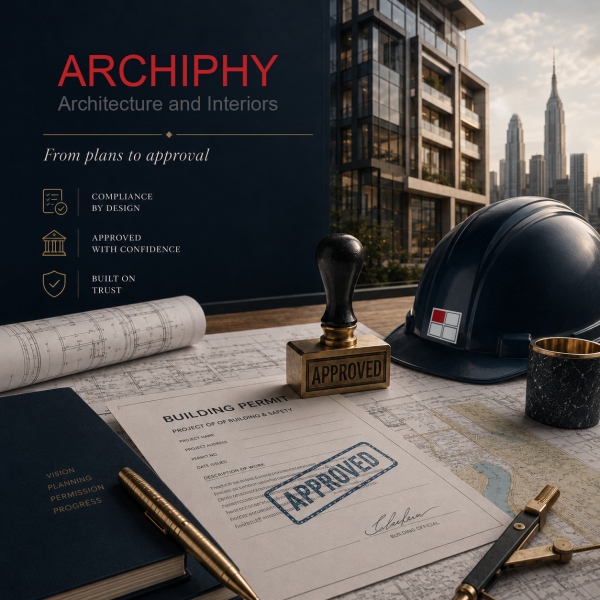
 Five Things That Delay a Commercial Permit Review in Dallas–Fort Worth
If you’re opening a retail store or restaurant in the Dallas–Fort Worth metroplex, you know the design can be ready in weeks, but the permit could take months. The delay isn’t usually a mystery, it’s predictable. Based on years of working with DFW municipalities from Dallas and Fort Worth to Plano, Frisco, Arlington, and McKinney here are the five most common reasons commercial permit reviews get stuck in our region, and how to avoid each one.
1. Missing or Incomplete Documentation
The fastest way to stall a permit in DFW is to submit a packet that isn’t complete.
Building departments demand thorough and precise documentation. Even a single missing element. like a plat plan, contractor license, product UL, or compliance certificate, can result in a resubmit request. That means your application sits in a queue while you revise and reapply.
Common missing items in DFW submittals:
-
Site plans or plat plans with correct setbacks
-
Updated contractor licenses and insurance
-
Impact study or traffic analysis (for larger projects)
-
HVAC load calculations and duct diagrams
-
Electrical schematics with proper load schedules
-
Health department forms
How to avoid it:
Do a pre-submission checklist review. Make sure every required drawing, certificate, and approval is included. For new construction and additions in DFW, schedule an optional pre-development plan review with the city (especially in Dallas) to confirm requirements early and avoid surprises.
2. Inaccurate or Conflicting Drawings
Permit offices in DFW don’t just check for missing pages, they check for consistency across all disciplines.
When architectural plans don’t match engineering specs, or when drawings conflict with local code requirements, the review process stalls. You’ll get back-and-forth corrections that can add weeks to your timeline.
Examples:
-
Architectural floor plans show different wall locations than structural plans
-
HVAC diagrams don’t align with electrical schematics
-
Elevations don’t match code-compliant heights or materials
-
MEP details conflict with local plumbing or fire codes
How to avoid it:
Have your architect, structural engineer, and MEP engineer review the full set together before submission. Use a coordinated checklist to confirm all disciplines agree on dimensions, materials, and systems, especially when working across multiple DFW cities.
3. Scope Changes After Submittal
Changing your project scope after the city has started reviewing is one of the biggest ways to reset your timeline in DFW.
Last-minute design changes almost always require new approvals. If you add a new restroom, add lighting, change the use classification, or adjust the building footprint mid-review, the city may require an amendment.
Common scope changes that cause delays:
-
Adding or removing tenant spaces
-
Changing use classification (e.g., from retail to restaurant)
-
Adjusting the building footprint or height
-
Modifying HVAC systems
How to avoid it:
Define your project scope early and lock it before submittal. If a change is unavoidable, communicate with the city as soon as possible and be prepared for a revised timeline. This is especially important in DFW where each city operates its own permitting system.
4. Unclear Use Classification or Zoning Requirements
Zoning rules and use classifications vary significantly between cities in the DFW metroplex.
What’s allowed in Dallas might not be allowed in Plano, Fort Worth, or Frisco. If your use classification is unclear or if your project conflicts with local zoning your permit can be delayed or rejected.
Examples:
-
Your restaurant design doesn’t meet local parking or setback requirements
-
Your retail tenant improvement conflicts with mixed-use zoning
-
Your use classification (e.g., “food service” vs. “retail”) is ambiguous
-
Zoning variances, a Specific Use Permit, or traffic impact studies are needed but not requested
How to avoid it:
Research local regulations early. Our guide to zoning surprises in Texas covers the traps that show up most often. Confirm your use classification with the city before designing. If you’re working across multiple DFW jurisdictions, treat each city as a separate process with its own rules and timelines.
5. DFW Municipal Backlogs
Even a perfect, complete application can get stuck in a queue and this is especially true in DFW.
The Dallas–Fort Worth metroplex is one of the fastest growing regions in the U.S. With thousands of new commercial builds and renovations underway each year, local municipalities are balancing high demand with limited staff. Delays often happen because city offices are overwhelmed, zoning requirements are complex (especially in redevelopment zones), and building codes are evolving.
Other factors in DFW:
-
Each city, Dallas, Fort Worth, Plano, Arlington, Frisco, McKinney, operates its own permitting system
-
Multiple departments reviewing the same permit (building, engineering, health, fire)
-
Each department enforcing its own guidelines and timelines
-
Difficult to navigate online platforms for application processing
How to avoid it:
You can’t eliminate city backlogs, but you can reduce their impact:
-
Plan for extra time in your project schedule
-
Allocate budget for permitting-related delays
-
Stay responsive during the process, quick client approvals and signatures keep things moving
-
Build permit timelines into your overall project schedule upfront
Quick Checklist: How to Keep Your DFW Permit Review Moving
To avoid the most common delays in Dallas–Fort Worth:
-
Review your documentation thoroughly before submission.
-
Confirm local building codes and zoning rules early with each city.
-
Coordinate all disciplines (architectural, structural, MEP) before submittal.
-
Define your scope and lock it before applying.
-
Plan for municipal backlogs and stay responsive during review.
If you’re starting a tenant improvement project in DFW, the best way to reduce permitting risk is to work with an architect who knows the local process. At Archiphy, we keep things simple: great architecture is about solving real problems efficiently, and handling the DFW permit process is part of that. [commercialarchitects]
About the author:
This post was written by the team at Archiphy, a Dallas-based commercial architecture firm specializing in retail and restaurant design across Texas. We handle everything from schematic design to permits and site supervision, helping DFW clients navigate the permit process without delays.